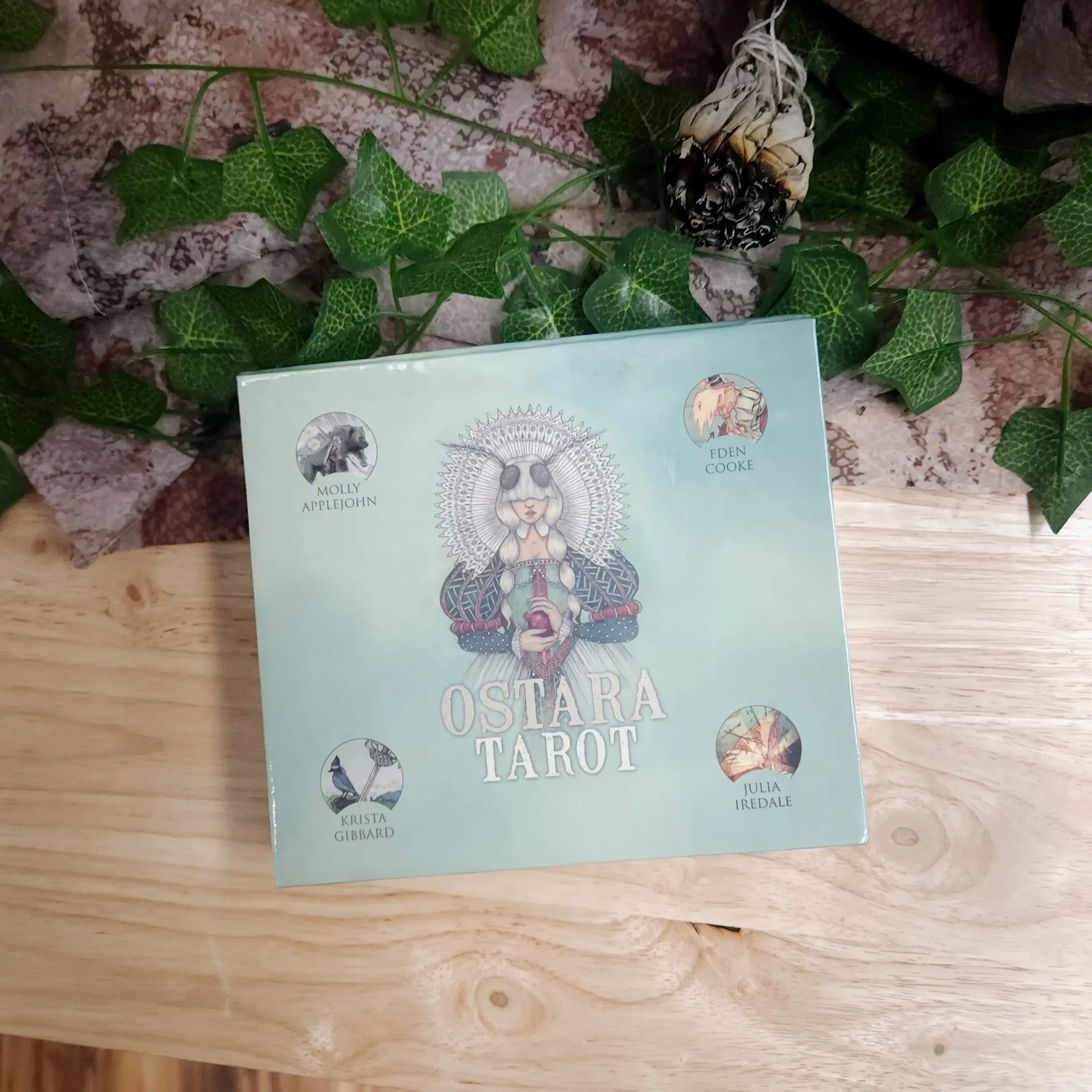
Ostara Tarot
Molly Applejohn · Eden Cooke · Krista Gibbard · Julia Iredale · Schiffer / REDFeather · ISBN 9780764352829
Four illustrators made this deck, and each one took a suit. Julia Iredale drew Wands, Eden Cooke drew Cups, Krista Gibbard drew Swords, Molly Applejohn drew Coins, and the Major Arcana is split between all four. You learn to recognize a suit by its palette before you read the pip, which is a genuinely useful shortcut in a fast reading.
What you get
- 78 cards: 22 Major Arcana, 56 Minor Arcana with full courts
- 112-page companion guidebook with keyword lists plus upright and reversed meanings for every card
- Rigid box, 5¼ × 6 × 1½ inches
- Shipping weight approximately 1 lb 6 oz
- Complete and ready to read; nothing else needed
About the deck and the art
The four artists met at art school in Vancouver, found a shared interest in the occult, and built the deck together. The Majors follow Rider-Waite-Smith imagery closely enough that a reader trained on RWS will recognize the cards on sight. The Minors run looser, carrying less of the standard RWS symbol set and leaning on scene and mood instead, with animals assigned across the numbered and court cards to carry part of the meaning.
The four-style approach divides opinion. If you want a deck with one unbroken visual voice from Fool to King of Coins, this is not that deck. If you like the anthology effect, where each suit arrives with its own weather, it's a pleasure to work with. Iredale's Wands run amber and forest green with fine line work. Gibbard's Swords each sit under one dominant wash. Applejohn's Coins are pale and whimsical. Cooke's Cups tilt surreal.
The figures throughout are predominantly female. The deck's stated concerns are wilderness, the natural world, and the feminine, and the artwork commits to that.
Provenance and tradition
Ostara is the modern Pagan name for the spring equinox. Behind the name sits a thin and interesting historical record. The Northumbrian monk Bede, writing in 725 CE, mentions a goddess named Ēostre as the figure the Anglo-Saxon month Ēosturmōnaþ was named after. That single passage is the only ancient attestation. Jacob Grimm, working through Old High German month names in the 1830s, proposed a continental cognate he called Ostara. The eggs, hares, and elaborate mythology now attached to her are 19th and 20th century accretion.
The deck treats Ostara as a season rather than as a deity biography. Read the cards for spring's work of thaw, first growth, and seeing what survived the winter.
Who this is for
Readers who want a nature-centered deck at a gift price. Beginners, because the guidebook gives keywords and reversals for all 78 cards and the Majors stay close to RWS. Collectors of illustrated and independently-created decks. Anyone building a seasonal rotation who wants a deck to bring out from Imbolc through Beltane. Works well for daily draws, journaling practice, and shadow or seasonal work.