The oldest god around is still playing the pipes.
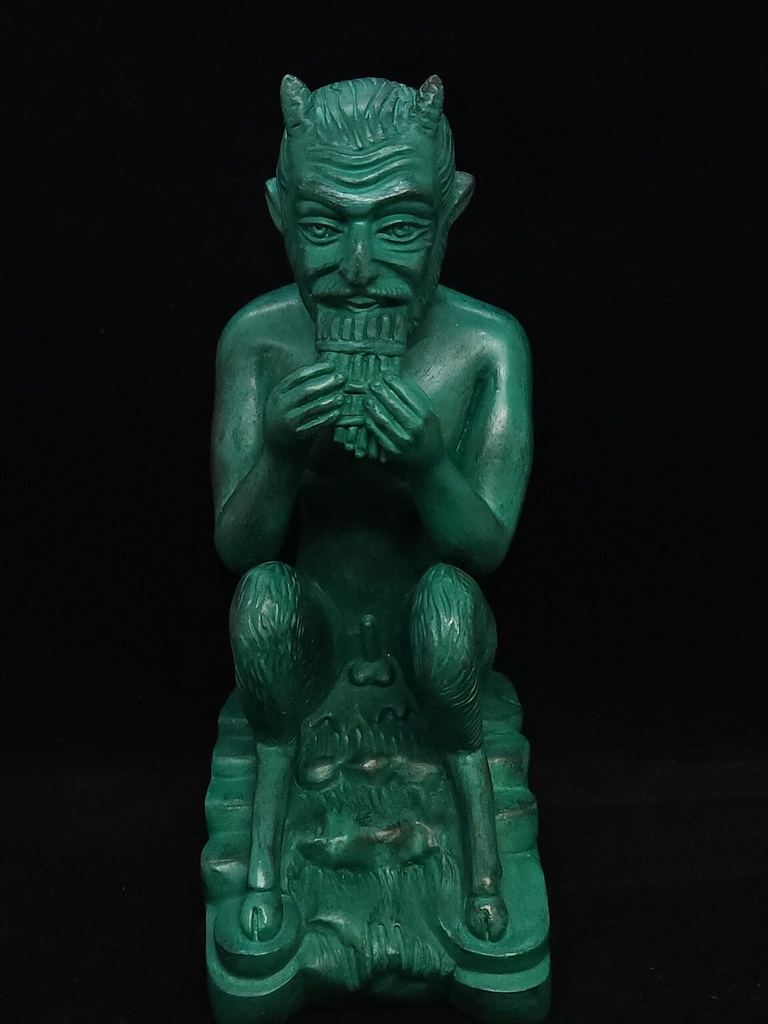
Pan doesn't belong to the marble temples. His worship is almost certainly older than that of the major Olympians, centered on caves and grottoes rather than grand halls. He's the god you meet in the woods, not the one you petition from a building. This 9" statue catches him seated, goat-legged, horns curling back, lifting the syrinx to his lips.
Those pipes have a story, and it's a haunting one. The syrinx is the nymph Syrinx herself, hidden as a reed by her sisters to escape Pan's pursuit — so when he plays, he's playing her. He's the god of the wild mountain forests, of the herds and the people who keep them, shown as a faun or satyr with goat's horns and legs, and his roots run back to Arcadia, where he ran alongside Dionysus, with the fir tree sacred to him and offerings of milk and honey laid down beside lambs and goats. He is a god of fertility and untamed sexuality, the raw green pulse under the whole living world.
And there's the edge every honest Pan-worker respects: he's where the word panic comes from, the sudden wild terror of the lonely places. But as the old song goes, let panic chase you through the maze; Pan is only playing.
Who he's for: devotees of Pan; witches who work wild, green, and untamed magic; anyone drawn to the horned god, the satyr, the goat-footed piper; practitioners of fertility, sexuality, and forest-and-grotto work; musicians and dancers; folks building an altar to the wilderness as a living power rather than a backdrop.
Why this piece: the deep verdant green finish suits him; it's the color of moss, of shadowed groves, of the dark-green glare from the old poems. At 9", he's a commanding altar presence with detail worth leaning in for: the horns, the pipes, the goat-haunches, the second face watching out from the base. Not a tame god, and not a tame statue.
9" resin, green finish. In-store, local pickup, or shipped.