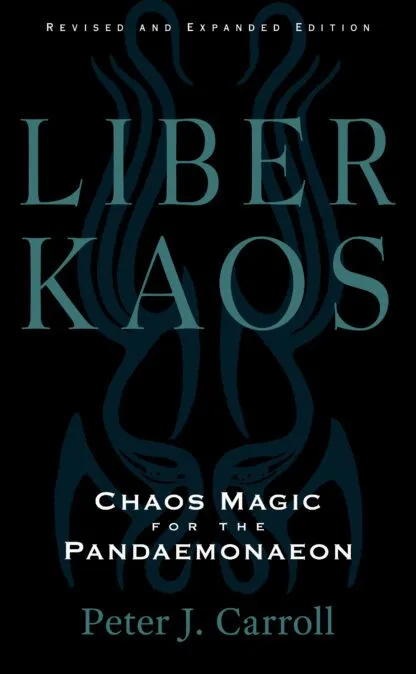
Carroll doesn't ask you to believe anything.
Liber Kaos is his second major text of chaos magic, and the more systematic one. Where Liber Null & Psychonaut threw the doors open, this book builds the architecture. Carroll lays out a working model of magic that treats belief as a tool rather than a truth: adopt a paradigm, get results, drop it, adopt another. Nothing is sacred except what works.
Inside you'll find the theory of magical causality, the aeonics model of historical magical development, Carroll's mathematics of magic, and a substantial section on the eight-fold path of practice, including sigilization, ritual, evocation, divination, and the more confrontational material on magickal combat and psychic self-defense. There's also a full account of the grade structure and training program of the Illuminates of Thanateros.
This is not a beginner's book. Carroll is dense, arrogant, funny, and occasionally infuriating. He assumes you can handle abstraction and that you'll do the work rather than read about it. Practitioners coming from traditional or devotional paths often find it bracing; it's magick stripped of reverence, reduced to mechanism.
Essential for anyone serious about chaos current, and genuinely useful for eclectic practitioners who want to interrogate why their own workings function.