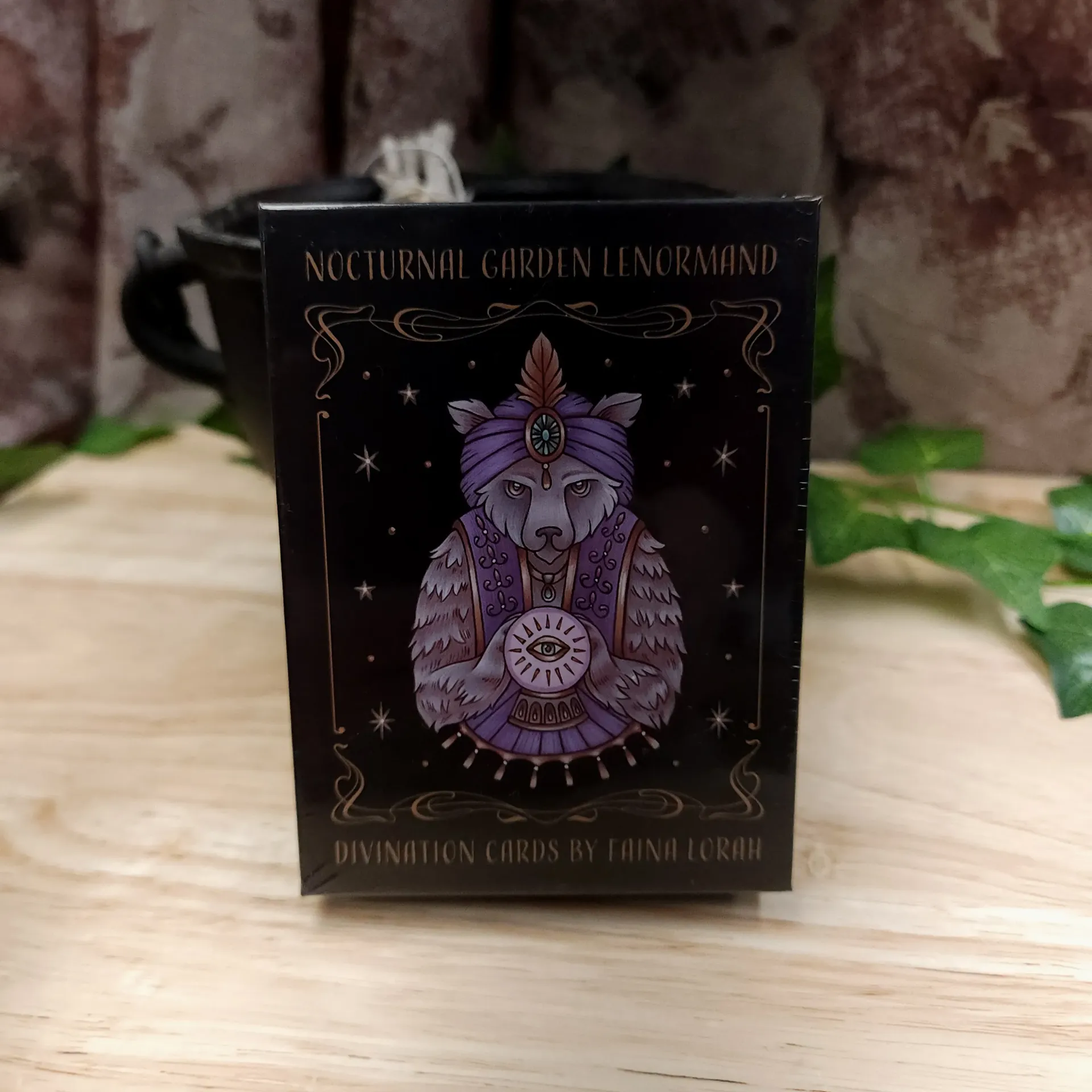
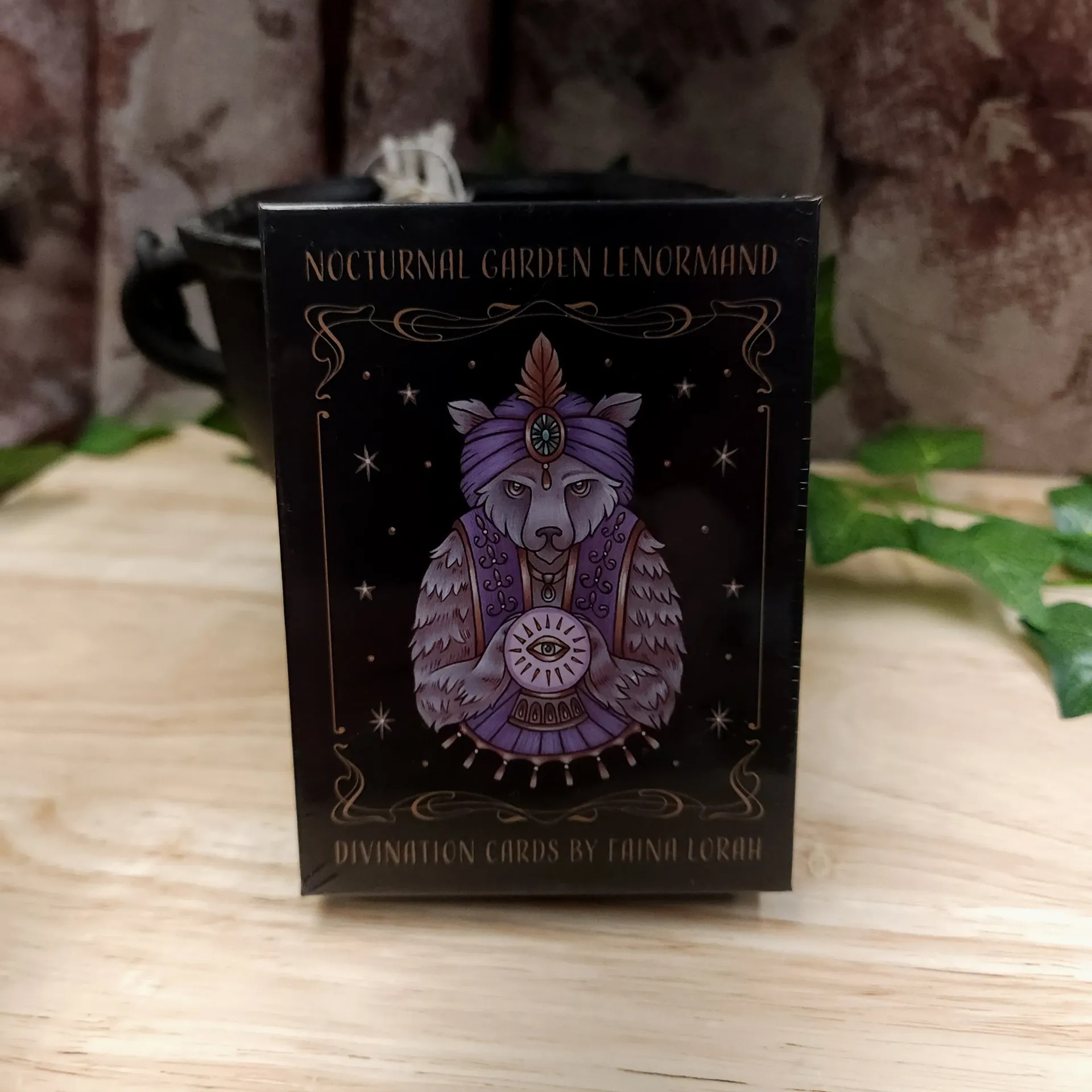
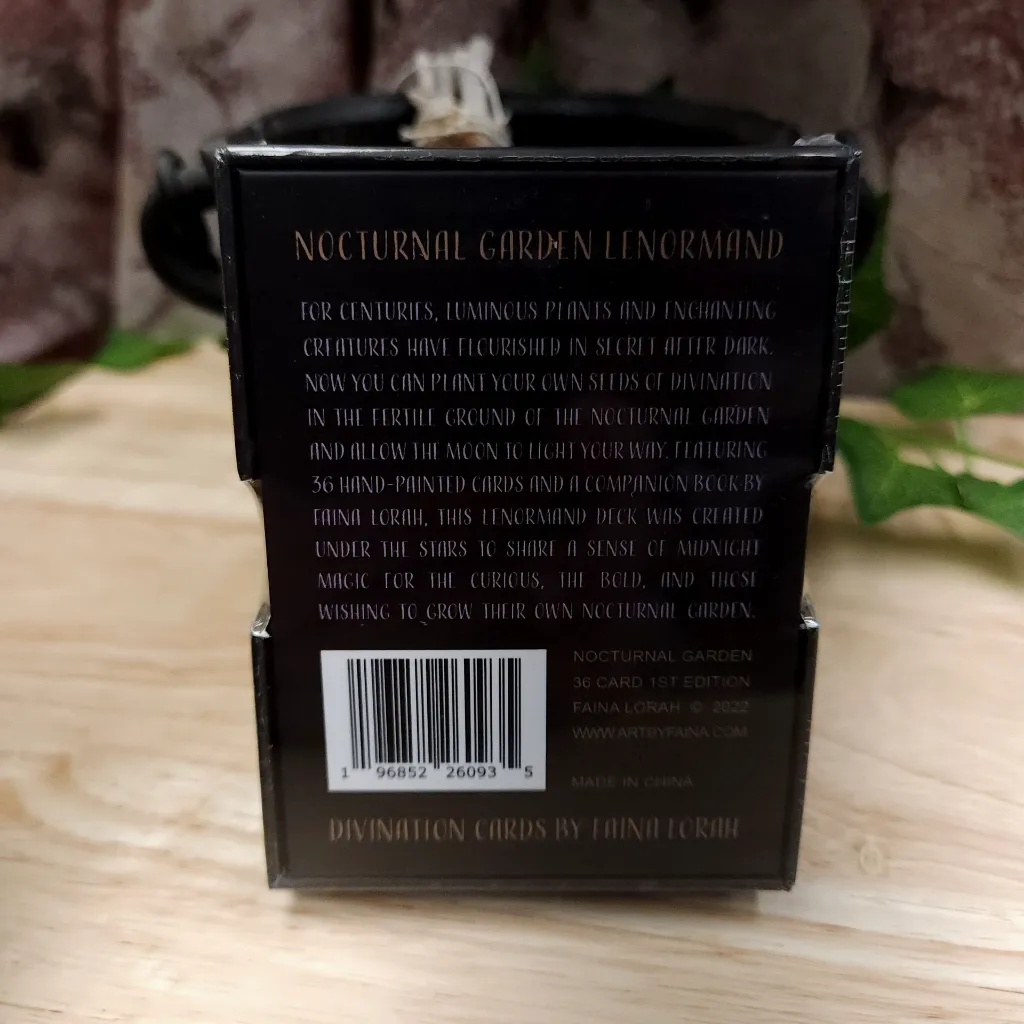
Lenormand is the plain-spoken branch of card reading. Thirty-six cards, each one a concrete symbol, read in pairs and lines the way words build a sentence. Faina Lorah hand-painted every card in this deck and set the traditional symbols in a garden after dark. This is her original 2022 first edition, published independently.
What you get
- 36 Lenormand cards, poker size (2.5" x 3.5")
- 350gsm card stock with a matte finish and gold edges
- Companion booklet by Faina Lorah with keywords and card meanings
- Rigid two-piece box with a velvet-lined insert
- First edition, 2022, printed in China
- Factory sealed
New gold-edged decks tend to cling together at first. That eases with shuffling.
About the deck
Faina Lorah is an award-winning author and illustrator whose work grows out of folklore and her Slavic heritage. Her books include Vasilisa's Russian Fairy Tales and Curious Creatures of Russian Folklore. Her decks include the Insecta Obscura Tarot, the Wild Whiskers Oracle, and two more Lenormands, Slavic Folklore and Yuletide Tales. She knows this system well. In Nocturnal Garden she uses Art Nouveau styling, with luminous plants and night creatures standing in for the classic symbols.
In 2026 Schiffer Publishing released a new edition of this deck with a longer guidebook. The deck on our shelf is the artist's own first printing.
Provenance & tradition
The 36-card Lenormand comes from Das Spiel der Hoffnung (The Game of Hope), a parlor game by Johann Kaspar Hechtel of Nuremberg, published around 1799. After the Paris cartomancer Marie Anne Lenormand died in 1843, publishers put her famous name on the deck. There's no record of her reading with it, but the name stuck, and the system spread across continental Europe with its own grammar.
That grammar is what makes Lenormand different from tarot. Cards modify each other. Ship beside Letter is news from far away. Lenormand answers concrete questions well: the job, the move, the house, the person. Start with a line of three, grow into a 3x3 square, and eventually lay out all 36 in the Grand Tableau. Card 20 in every Lenormand deck is the Garden, the public world of gatherings and community, which gives this deck's name a second layer for anyone who knows the system.
Reading by moonlight
We teach divination as a look at the general flow of events and the most likely outcome if the current course holds. Free will stays intact, and paths can change. Meditation sits at the root of every method, because a still mind lets the information come up. A formal system like Lenormand rewards study: learn the symbols until they come to you by reflex.
The Moon rules intuition, psychic ability, secrets, and dreams. Her day is Monday, her element Water, her sign Cancer. The waning and dark moon belong to the Crone, and tradition gives that phase to divination and prophecy. For the reading table, try moonstone, pearl, or clear quartz, with jasmine or sandalwood incense. On a full moon, Wiccan practice dresses the altar with night-blooming and white flowers, which suits a deck built around a garden that wakes after sunset.
Who this is for
- Beginners learning Lenormand who want keywords and meanings in the box
- Tarot readers adding a second system for practical, concrete questions
- Collectors of indie, artist-made decks and of Faina Lorah's work
- Night owls, gardeners, and anyone who leaves the porch light on for moths
- A gift for the reader who already owns every mass-market deck