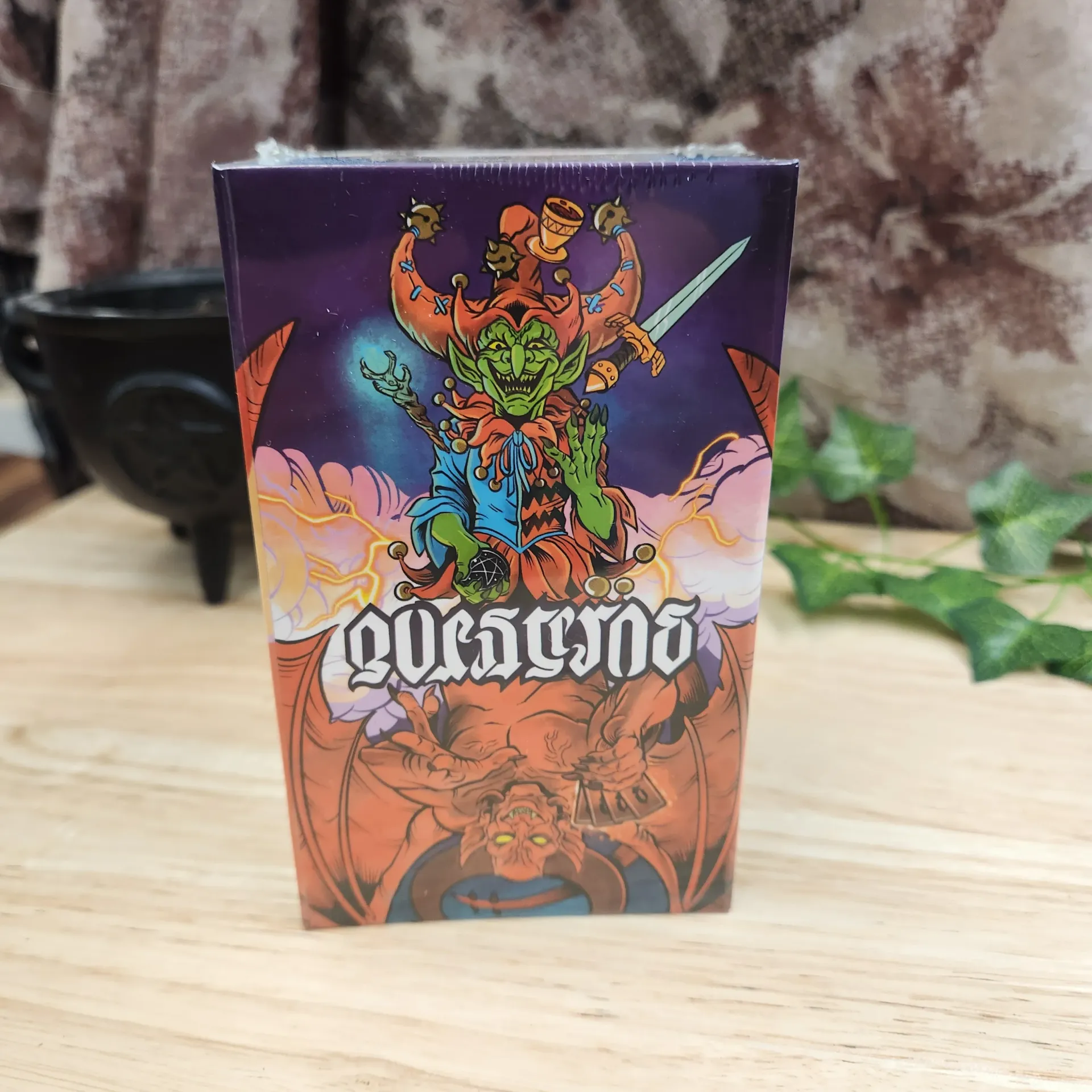
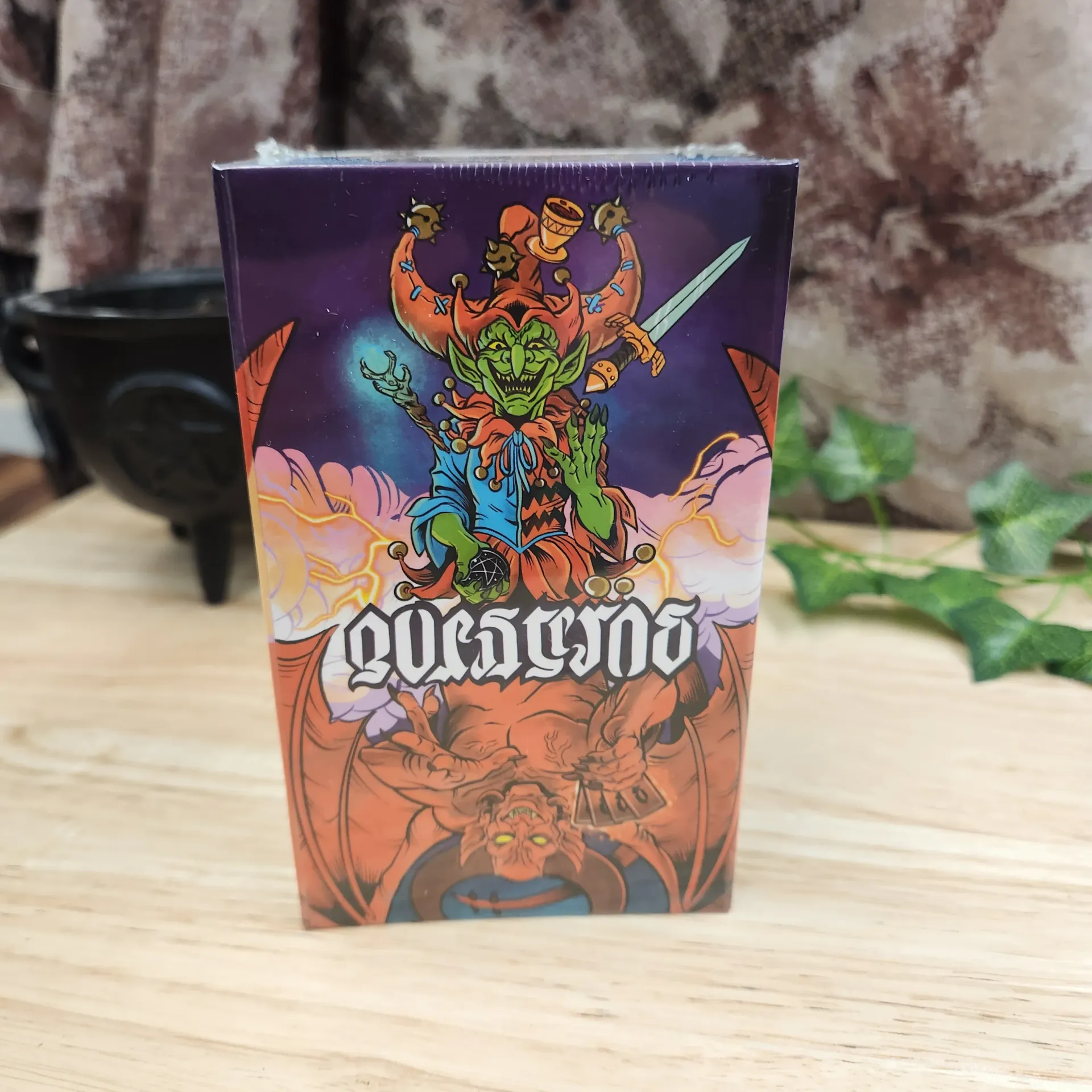
Questeros — by Wesley Woodbury, art by John De Campos
Tarot started out as a card game. In fifteenth-century northern Italy, the trump-suited decks called tarocchi were made for trick-taking, and people in France, Austria and Central Europe still play tarot games today. Reading the cards for divination came about three centuries later. Questeros brings both halves back together in one high-fantasy deck of 80 cards that works as a game table and a reading deck.
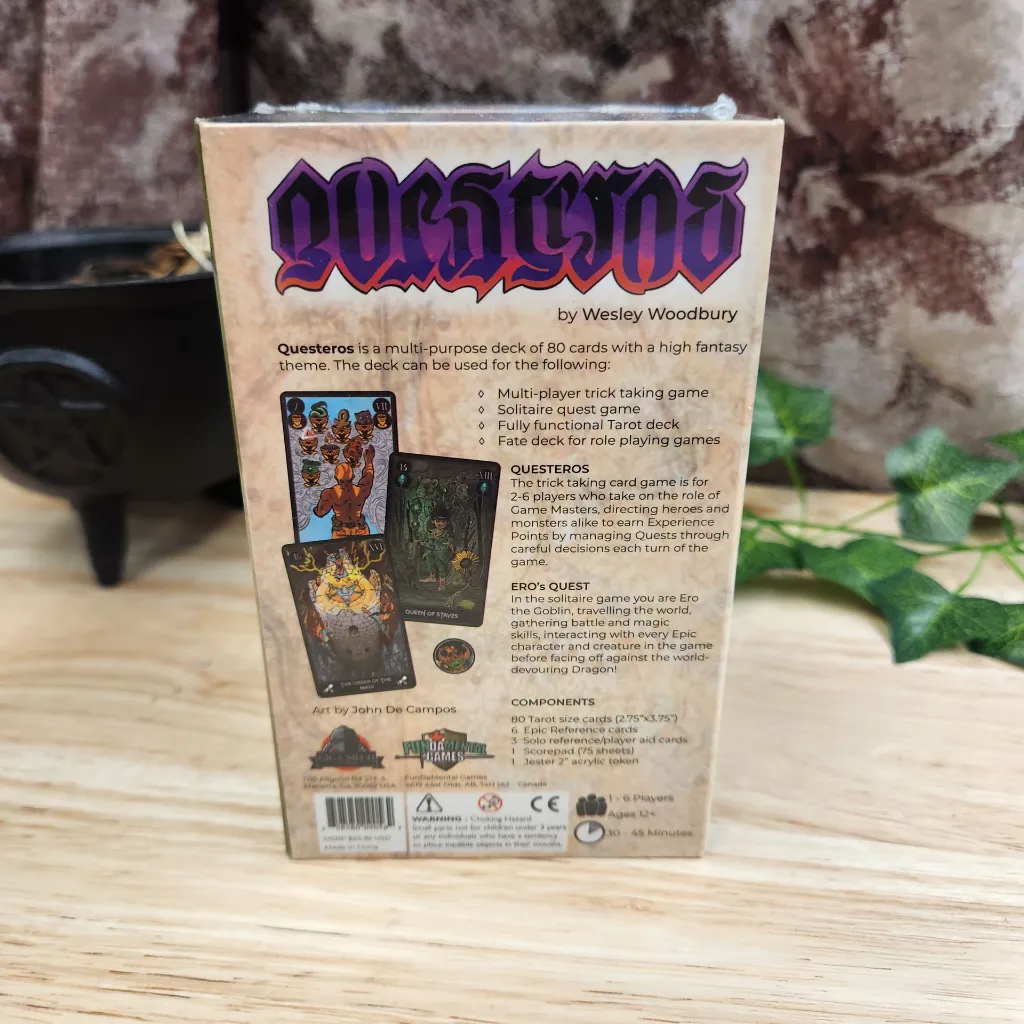
What you get
- 80 cards, 2.75" x 3.75"
- 6 Epic Reference cards
- 3 Solo reference/player aid cards
- 1 scorepad, 75 sheets
- 1 Jester acrylic token, 2"
- 1–6 players, ages 12+, 30–45 minutes per game
- Factory sealed
The acrylic token is a small part. Keep it away from children under 3.
Four ways to use it
Questeros (2–6 players). A trick-taking game where every player is a Game Master. You direct heroes and monsters to manage Quests and earn Experience Points over seven rounds.
Ero's Quest (solo). You play Ero the Goblin. You travel the world, pick up battle and magic skills, and meet every Epic character and creature in the deck before your final fight with the world-devouring Dragon.
Tarot. The deck keeps the full tarot structure. There are four suits of fourteen: Blades, Staves, Orbs and Cups, each with Page, Knight, Queen and King. Next come 22 Epic cards in the Major Arcana sequence. Card 10, the Deck of Fate, sits where the Wheel of Fortune does. Card 13 is the Death Knight, card 15 is the Demon, and card 16, the Order of the Magi, shows a tower split by lightning. The Warlock opens the run at 1, the Jester holds the Fool's place, and the Dragon closes it at 21.
RPG fate deck. Shuffle all 80 cards at the start of a session. The GM secretly draws one card per player and uses it as a story thread, or reveals it at the worst possible moment. Players can also hand fate cards back to trigger events.
The two Gods
Two cards go beyond the standard 78. Adwanis, Goddess of Light, carries hope, life, unity and victory. Nekradis, God of Darkness, carries doom, chaos, loss and defeat. As a reading pair they give you a clear yes and no, or a turning point that tips one way or the other.
Readers, take note
The box holds the game components but no tarot guidebook. The publisher keeps each card's meaning and artwork symbolism on its website. The suits map to the familiar ones (Blades to Swords, Staves to Wands, Orbs to Pentacles), so a reader who knows any Rider-Waite-Smith-style deck can read Questeros on day one. The cards are shorter than standard tarot cards, so they fit easily in smaller hands and on a crowded game table.
Who this is for
Tabletop gamers who want to try tarot, tarot readers who want a deck they can also play, D&D and Pathfinder GMs looking for a fate mechanic, and anyone who plays solo card games. It's also a great gift for the person in your life who owns more dice than shoes.