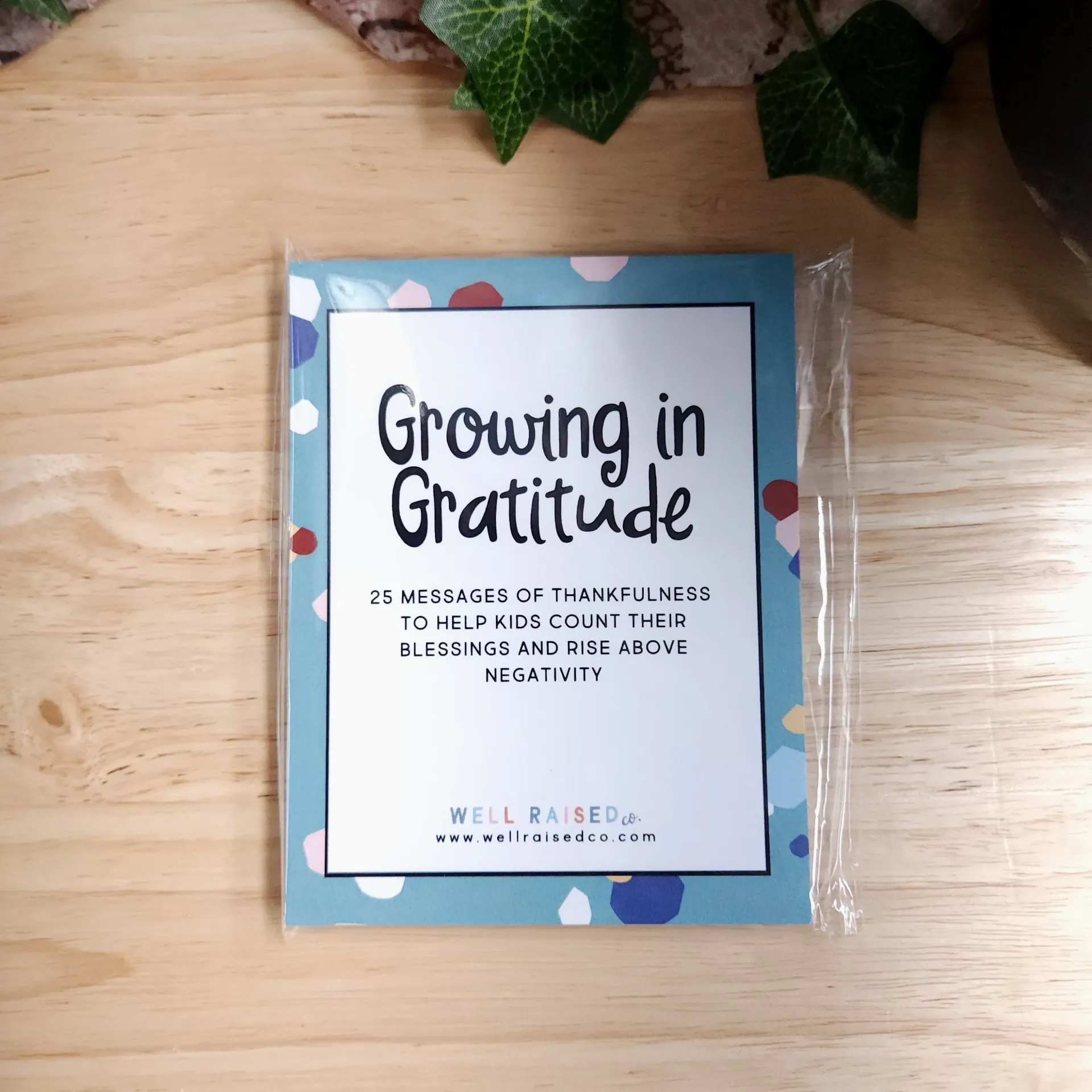
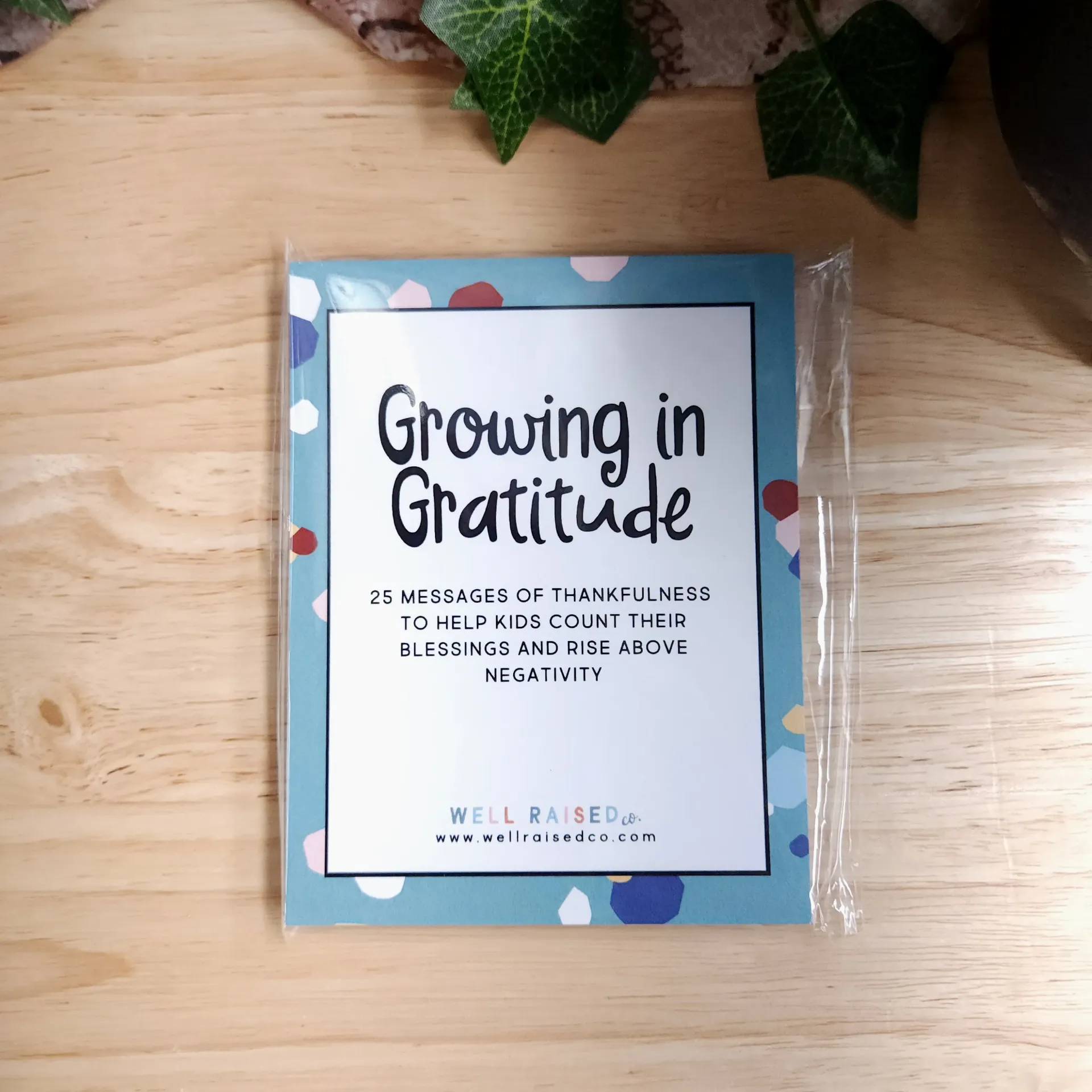
Growing in Gratitude — 25 Gratitude Cards for Kids
Twenty-five flat printed cards, each carrying one complete gratitude statement written in a child's voice. No box, no guidebook, no instructions to work through. You hand a kid a card, or you tuck one in a lunchbox, and the card does the whole job on its own.
What you get
- 25 cards, one message per card
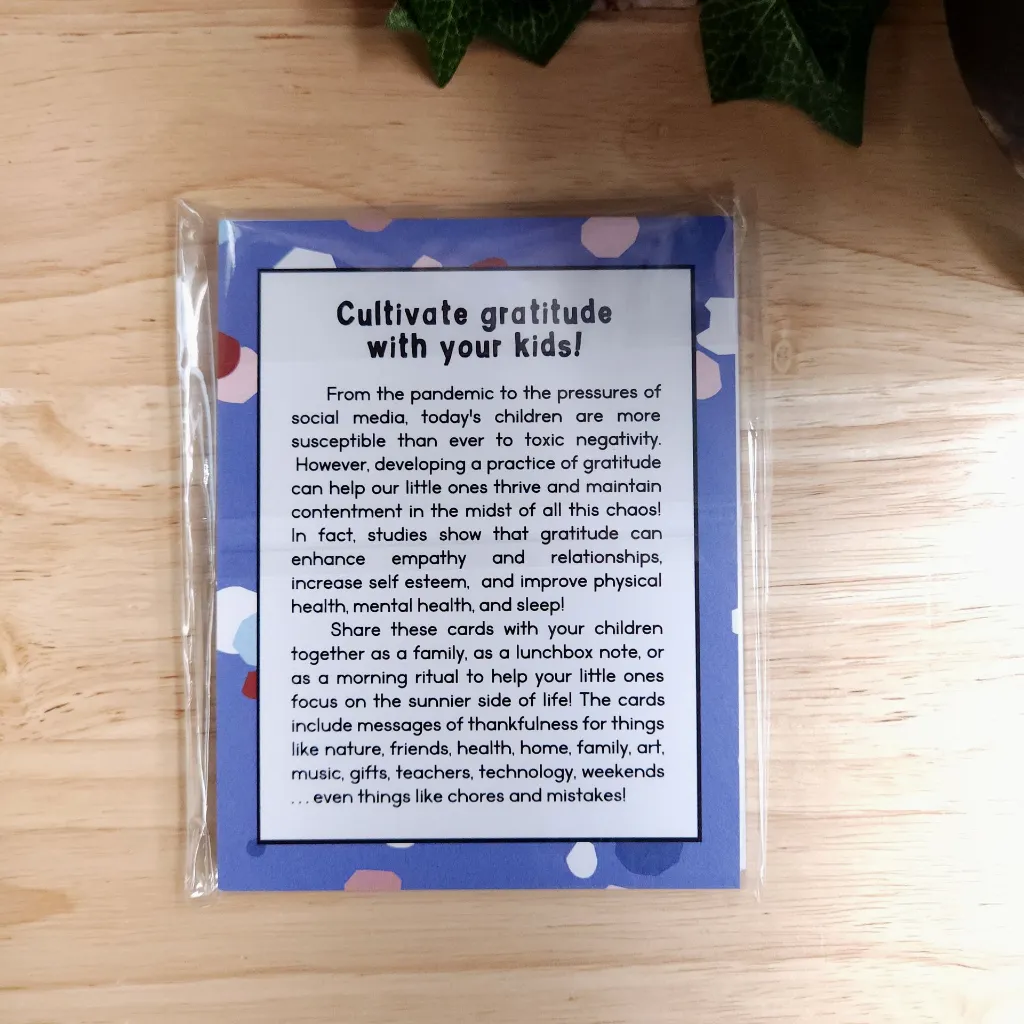
- Packaged in a clear sleeve with a printed cover and back card, 4.75 x 3.5 inches overall
- From Well Raised Co.
- Ships at 0.14 lb
What's on the cards
The statements stay concrete and age-appropriate: grateful for food, for teachers, for classmates, for my body, for the weekends, for being able to read, for having a home. A few reach further than the usual list — thankful for alone time, for air conditioning and heating, for my mistakes. That last one earns its place on the shelf, because gratitude for a mistake is a substantially harder move than gratitude for a toy, and it's the one that keeps working when a kid is eleven and cringing at themselves.
The format makes them flexible. Read one at breakfast. Put one in a lunchbox. Pass one around the table and let each person answer it out loud. Teachers use packs like this for morning meeting; the count works out to five weeks of school days.
About the practice
The research on gratitude practice is real but narrower than the marketing around it usually suggests. The foundational study is Emmons and McCullough's 2003 work comparing people who kept weekly gratitude lists against people who logged hassles; the gratitude group reported better mood, more optimism, and better sleep. Later work has broadly supported wellbeing and sleep-quality effects in adults. Research specific to children is thinner and effects are modest. This is a habit-builder and a conversation opener, not a treatment for anything.
Families who use these well note that gratitude prompts work best alongside a child's hard feelings rather than in place of them. A kid who's furious about a bad day usually needs the anger heard first; the card lands better afterward. Used that way, the pack builds a real habit. Used to close down a feeling, it teaches a kid that the honest answer is the wrong answer.
Who this is for
Parents building a morning or bedtime routine. Homeschool families wanting a short daily practice with no prep. Elementary teachers and counselors running social-emotional learning or morning meeting. Grandparents who want a small, useful gift. Good stocking stuffer, good birthday-party favor pack if you're splitting it, good sit-down-at-the-table anchor for a family that keeps meaning to start a gratitude practice and never finds the on-ramp.